Drywall is essential for a clean and polished look in your Charlotte, NC home. Recognizing the signs to repair drywall early can prevent bigger problems. At JMB Construction, your Charlotte, NC experts for drywall installation and repair, we’re sharing the top 7 signs to repair drywall to watch out for.
[/et_pb_text][dipi_button_grid flex_direction=”row” justify_content=”flex-start” _builder_version=”4.27.4″ _module_preset=”default” animation_direction=”left” global_colors_info=”{}”][dipi_button_grid_child button_text=”LET’S TALK” button_link=”tel:9802306181″ _builder_version=”4.27.4″ _module_preset=”default” custom_button=”on” button_text_size=”15px” button_text_color=”#FFFFFF” button_bg_color=”#465691″ button_border_width=”10px” button_border_color=”#465691″ button_font=”Montserrat|700|||||||” global_colors_info=”{}”][/dipi_button_grid_child][dipi_button_grid_child button_text=”CONTACT US” button_link=”https://jmbconstructionllcnc.com/contact/” _builder_version=”4.24.1″ _module_preset=”default” custom_button=”on” button_text_size=”15px” button_text_color=”#FFFFFF” button_bg_color=”#000035″ button_border_width=”10px” button_border_color=”#000035″ button_font=”Montserrat|700|||||||” global_colors_info=”{}”][/dipi_button_grid_child][/dipi_button_grid][/et_pb_column][/et_pb_row][et_pb_row use_custom_gutter=”on” gutter_width=”2″ make_equal=”on” _builder_version=”4.27.4″ _module_preset=”default” width=”90%” max_width=”90%” custom_padding=”||18px|||” custom_css_main_element=”align-items:center;” locked=”off” global_colors_info=”{}”][et_pb_column type=”4_4″ _builder_version=”4.24.1″ _module_preset=”default” background_color=”#ffffff” custom_padding=”15px|15px|15px|15px|true|true” border_radii=”on|12px|12px|12px|12px” global_colors_info=”{}”][et_pb_text _builder_version=”4.27.4″ _module_preset=”default” header_2_font=”Poppins|600|||||||” header_2_text_color=”#000000″ header_2_font_size=”30px” header_3_font=”|700|||||||” header_3_text_align=”left” custom_margin=”||13px||false|false” animation_direction=”top” global_colors_info=”{}”]Why You Should Care About Damaged Drywall
[/et_pb_text][et_pb_text _builder_version=”4.27.4″ _module_preset=”default” text_font=”Poppins||||||||” text_text_color=”#000000″ text_font_size=”15px” text_line_height=”2em” global_colors_info=”{}”]Damaged drywall isn’t just ugly to look at. It can lead to bigger problems like mold, pests, and even structural issues. Taking care of drywall repairs early can save you time, money, and stress.[/et_pb_text][/et_pb_column][/et_pb_row][et_pb_row use_custom_gutter=”on” gutter_width=”2″ make_equal=”on” _builder_version=”4.27.4″ _module_preset=”default” width=”90%” max_width=”90%” custom_padding=”14px||21px|||” custom_css_main_element=”align-items:center;” locked=”off” global_colors_info=”{}”][et_pb_column type=”4_4″ _builder_version=”4.24.1″ _module_preset=”default” background_color=”#ffffff” custom_padding=”15px|15px|15px|15px|true|true” border_radii=”on|12px|12px|12px|12px” global_colors_info=”{}”][et_pb_text _builder_version=”4.27.4″ _module_preset=”default” header_2_font=”Poppins|600|||||||” header_2_text_color=”#000000″ header_2_font_size=”30px” header_3_font=”|700|||||||” header_3_text_align=”left” custom_margin=”||13px||false|false” animation_direction=”top” global_colors_info=”{}”]1. Visible Cracks and Fractures
[/et_pb_text][et_pb_text _builder_version=”4.27.4″ _module_preset=”default” text_font=”Poppins||||||||” text_text_color=”#000000″ text_font_size=”15px” text_line_height=”2em” global_colors_info=”{}”]One of the easiest signs to repair drywall is visible cracks. If you notice straight or jagged lines on your walls or ceilings, don’t ignore them. Cracks often happen due to house settling, humidity changes, or poor drywall installation. Small cracks can quickly grow into big ones if left alone.
Tip: Keep an eye on cracks. If they get bigger, call a professional!
[/et_pb_text][/et_pb_column][/et_pb_row][et_pb_row use_custom_gutter=”on” gutter_width=”2″ make_equal=”on” _builder_version=”4.27.4″ _module_preset=”default” width=”90%” max_width=”90%” custom_padding=”14px|||||” custom_css_main_element=”align-items:center;” locked=”off” global_colors_info=”{}”][et_pb_column type=”4_4″ _builder_version=”4.24.1″ _module_preset=”default” background_color=”#ffffff” custom_padding=”15px|15px|15px|15px|true|true” border_radii=”on|12px|12px|12px|12px” global_colors_info=”{}”][et_pb_text _builder_version=”4.27.4″ _module_preset=”default” text_text_color=”#000000″ header_2_font=”Poppins|600|||||||” header_2_text_color=”#000000″ header_2_font_size=”30px” header_3_font=”|700|||||||” header_3_text_align=”left” custom_margin=”||13px||false|false” animation_direction=”top” global_colors_info=”{}”]2. Water Stains and Discoloration: A Red Flag for Drywall Damage
[/et_pb_text][et_pb_text _builder_version=”4.27.4″ _module_preset=”default” text_font=”Poppins||||||||” text_text_color=”#000000″ text_font_size=”15px” text_line_height=”2em” global_colors_info=”{}”]Have you noticed unsightly yellow, brown, or even dark stains on your walls in your Charlotte, NC home? These water stains are more than just cosmetic issues; they are a clear indication of underlying moisture damage that needs immediate attention. When water penetrates your drywall, it weakens the material’s structural integrity and creates a breeding ground for mold and mildew to establish themselves in the affected areas. [/et_pb_text][et_pb_image src=”https://jmbconstructionllcnc.com/wp-content/uploads/2025/05/Have-you-noticed-unsightly-yellow-brown-or-even-dark-stains-on-your-walls-in-your-Charlotte-NC-home.jpg” title_text=”Have-you-noticed-unsightly-yellow,-brown,-or-even-dark-stains-on-your-walls-in-your-Charlotte,-NC-home” _builder_version=”4.27.4″ _module_preset=”default” global_colors_info=”{}”][/et_pb_image][/et_pb_column][/et_pb_row][et_pb_row use_custom_gutter=”on” gutter_width=”2″ make_equal=”on” _builder_version=”4.27.4″ _module_preset=”default” width=”90%” max_width=”90%” custom_padding=”14px|||||” custom_css_main_element=”align-items:center;” locked=”off” global_colors_info=”{}”][et_pb_column type=”4_4″ _builder_version=”4.24.1″ _module_preset=”default” background_color=”#ffffff” custom_padding=”15px|15px|15px|15px|true|true” border_radii=”on|12px|12px|12px|12px” global_colors_info=”{}”][et_pb_text _builder_version=”4.27.4″ _module_preset=”default” text_font=”|700|||||||” text_text_color=”#000000″ header_2_font=”Poppins|600|||||||” header_2_text_color=”#000000″ header_2_font_size=”30px” header_3_font=”|700|||||||” header_3_text_align=”left” custom_margin=”||13px||false|false” animation_direction=”top” global_colors_info=”{}”]Common Causes of Moisture Damage Leading to Water Stains:
[/et_pb_text][et_pb_text _builder_version=”4.27.4″ _module_preset=”default” text_font=”Poppins||||||||” text_text_color=”#000000″ text_font_size=”15px” text_line_height=”2em” global_colors_info=”{}”]- Leaky Roofs: Roof damage, even seemingly minor, can allow rainwater to seep into your attic and down your walls.
- Leaky Pipe: A hidden leaky pipe within your walls or ceilings can slowly saturate the surrounding drywall, leading to discoloration.
- Burst Pipes: A sudden burst pipe will cause significant and immediate water damage to the affected areas.
- High Humidity: While Charlotte isn’t as consistently humid as some tropical climates, prolonged periods of high humidity, especially in poorly ventilated areas like bathrooms and kitchens, can lead to moisture absorption by the drywall over time.
- Condensation: Condensation from air conditioning units or poorly insulated pipes can also contribute to moisture damage on nearby walls.
- External Water Intrusion: Issues with exterior walls, such as cracks or poor sealing around windows and doors, can allow rainwater to seep into the drywall.
Action Step:
The first and most crucial step is to identify and repair the source of the moisture damage, whether it’s a leaky pipe, a roof issue, or ventilation problems. Once the leak is fixed, the affected areas of drywall need to be properly addressed. Depending on the extent of the damage, this may involve:
- Minor Stains: For small, isolated stains where the drywall is still firm, you may be able to clean the surface and apply a stain-blocking primer before repainting. However, ensure the underlying moisture issue is resolved.
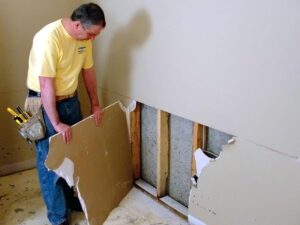
- Damaged Drywall: If the drywall is soft, crumbly, bulging, or shows signs of mold growth, it needs to be cut out and replaced with new drywall. Be sure to also inspect and address any moisture damage to the underlying studs and insulation.
Ignoring water stains and the potential moisture damage behind them is a costly mistake. Addressing these signs to repair drywall promptly will protect your Charlotte, NC home’s structural integrity, prevent mold growth, and maintain its aesthetic appeal.
[/et_pb_text][et_pb_image src=”https://jmbconstructionllcnc.com/wp-content/uploads/2025/05/Ignoring-water-stains-and-the-potential-moisture-damage-behind-them-is-a-costly-mistake.jpg” _builder_version=”4.27.4″ _module_preset=”default” title_text=”Ignoring-water-stains-and-the-potential-moisture-damage-behind-them-is-a-costly-mistake” hover_enabled=”0″ sticky_enabled=”0″][/et_pb_image][/et_pb_column][/et_pb_row][et_pb_row use_custom_gutter=”on” gutter_width=”2″ make_equal=”on” _builder_version=”4.27.4″ _module_preset=”default” width=”90%” max_width=”90%” custom_padding=”14px||15px|||” custom_css_main_element=”align-items:center;” locked=”off” global_colors_info=”{}”][et_pb_column type=”4_4″ _builder_version=”4.24.1″ _module_preset=”default” background_color=”#ffffff” custom_padding=”15px|15px|15px|15px|true|true” border_radii=”on|12px|12px|12px|12px” global_colors_info=”{}”][et_pb_text _builder_version=”4.27.4″ _module_preset=”default” text_text_color=”#000000″ header_2_font=”Poppins|600|||||||” header_2_text_color=”#000000″ header_2_font_size=”30px” header_3_font=”|700|||||||” header_3_text_align=”left” custom_margin=”||13px||false|false” animation_direction=”top” global_colors_info=”{}”]3. Peeling or Bubbling Paint
[/et_pb_text][et_pb_text _builder_version=”4.27.4″ _module_preset=”default” text_font=”Poppins||||||||” text_text_color=”#000000″ text_font_size=”15px” text_line_height=”2em” global_colors_info=”{}”]If you see your paint bubbling, peeling, or blistering, it’s often due to trapped moisture behind your drywall. This is more than a cosmetic issue. Moisture behind the walls can cause serious damage over time.
Solution: Scrape away the damaged paint, check the drywall underneath, and repair any soft or damp areas.
[/et_pb_text][/et_pb_column][/et_pb_row][et_pb_row use_custom_gutter=”on” gutter_width=”2″ make_equal=”on” _builder_version=”4.27.4″ _module_preset=”default” width=”90%” max_width=”90%” custom_padding=”6px|||||” custom_css_main_element=”align-items:center;” locked=”off” global_colors_info=”{}”][et_pb_column type=”4_4″ _builder_version=”4.24.1″ _module_preset=”default” background_color=”#ffffff” custom_padding=”15px|15px|15px|15px|true|true” border_radii=”on|12px|12px|12px|12px” global_colors_info=”{}”][et_pb_text _builder_version=”4.27.4″ _module_preset=”default” text_text_color=”#000000″ header_2_font=”Poppins|600|||||||” header_2_text_color=”#000000″ header_2_font_size=”30px” header_3_font=”|700|||||||” header_3_text_align=”left” custom_margin=”||13px||false|false” animation_direction=”top” global_colors_info=”{}”]4. Sagging or Bulging Walls and Ceilings
[/et_pb_text][et_pb_text _builder_version=”4.27.4″ _module_preset=”default” text_font=”Poppins||||||||” text_text_color=”#000000″ text_font_size=”15px” text_line_height=”2em” global_colors_info=”{}”]When drywall becomes too heavy from water damage, it starts to sag or bulge. This is a major red flag! Warning Signs:- A soft, drooping ceiling
- Bulging sections of walls
5. Mold or Mildew
Black spots, green patches, and musty smells are sure signs of mold or mildew. Mold can start growing within 24-48 hours of moisture exposure.
[/et_pb_text][et_pb_text _builder_version=”4.27.4″ _module_preset=”default” text_font=”Poppins||||||||” text_text_color=”#000000″ text_font_size=”15px” text_line_height=”2em” global_colors_info=”{}”]Why it’s urgent:- Health risks (allergies, breathing problems)
- Structural damage
6. Popped Nails or Screws
Sometimes, nails or screws push out of the drywall, leaving bumps or holes. This happens when the wood framing behind the drywall shifts over time.[/et_pb_text][et_pb_text _builder_version=”4.27.4″ _module_preset=”default” text_font=”Poppins||||||||” text_text_color=”#000000″ text_font_size=”15px” text_line_height=”2em” global_colors_info=”{}”]Why fix it?- Prevent bigger drywall cracks
- Restore a smooth, finished look
7. Unexplained Holes or Dents
Accidents happen. Furniture hits the wall, kids play too rough, or doors swing open too hard. Small holes and dents can make your home look worn out and messy.
[/et_pb_text][et_pb_text _builder_version=”4.27.4″ _module_preset=”default” text_font=”Poppins||||||||” text_text_color=”#000000″ text_font_size=”15px” text_line_height=”2em” global_colors_info=”{}”]Solution:- Patch small holes with drywall compound
- Replace sections with larger damage
Final Thoughts: Don’t Ignore the Signs
[/et_pb_text][et_pb_text _builder_version=”4.27.4″ _module_preset=”default” text_text_color=”#FFFFFF” global_colors_info=”{}”]If you’ve noticed any of these signs to repair drywall, it’s time to take action. Acting quickly can save you from expensive repairs down the road. We’re here to help with professional drywall repairs and drywall installation in Charlotte, NC.
Need help? Contact JMB Construction today for a free estimate. Let’s keep your home safe, beautiful, and strong!
[/et_pb_text][dipi_button_grid flex_direction=”row” justify_content=”flex-start” _builder_version=”4.27.4″ _module_preset=”default” animation_direction=”left” global_colors_info=”{}”][dipi_button_grid_child button_text=”LET’S TALK” button_link=”tel:9802306181″ _builder_version=”4.27.4″ _module_preset=”default” custom_button=”on” button_text_size=”15px” button_text_color=”#FFFFFF” button_bg_color=”#465691″ button_border_width=”10px” button_border_color=”#465691″ button_font=”Montserrat|700|||||||” global_colors_info=”{}”][/dipi_button_grid_child][dipi_button_grid_child button_text=”CONTACT US” button_link=”https://jmbconstructionllcnc.com/contact/” _builder_version=”4.24.1″ _module_preset=”default” text_style_text_color=”#000000″ custom_button=”on” button_text_size=”15px” button_text_color=”#000000″ button_bg_color=”#FFFFFF” button_border_width=”10px” button_border_color=”#FFFFFF” button_font=”Montserrat|700|||||||” global_colors_info=”{}”][/dipi_button_grid_child][/dipi_button_grid][/et_pb_column][/et_pb_row][/et_pb_section]